What Skill Tracking Means for College Admissions
Admissions is slowly shifting toward evidence of real skills and work. What that means for middle schoolers, and what parents should avoid.
If you have a middle schooler, you have probably heard some version of this at a school pickup line: colleges care less about test scores now, and more about what kids can actually do. Then someone mentions an app that tracks skills, or a portfolio platform, or a digital badge, and suddenly every parent within earshot is wondering whether their twelve-year-old is already behind. I want to slow that conversation down. I build learning software and I am a parent of a middle schooler, so I think about this from both sides. Some of the shift is real and some of it is hype. And the most important thing a parent can do about it does not involve an app at all.
A note before we start: college admissions practices vary widely from school to school and they are changing. Nothing here is a claim about how any particular college decides. Treat this as a way of thinking, not a rulebook.
The slow shift from scores to evidence
For a long time, the public story of admissions centered on a few numbers: grades, class rank, a standardized test score. Those numbers are easy to compare, which is part of why they lasted. They also tell you a fairly narrow thing about a student.
Over the past several years, many institutions have talked more openly about wanting a fuller picture. You hear phrases like holistic review, evidence of initiative, and demonstrated interest. Testing policies at different schools have moved in different directions, and some have moved back. The honest summary is that there is no single trend line, but there is a broad and growing interest in what a student has actually done and can actually do, alongside the traditional measures.
That interest has created a market. Skill-tracking apps, portfolio platforms, digital credentials and verified records all promise, in one way or another, to capture what a transcript misses. Some of those ideas are genuinely useful. Some are a new way to sell anxiety.
What a "record of skills" can look like
When people talk about skill tracking, they usually mean one of a few things.
- Portfolios. A collection of real work: essays, projects, code, art, research, a video of a talk. The strength of a portfolio is that it is concrete. You can look at the thing.
- Verified skill records. A record that some person or system has checked that a student can do something specific, like write a structured argument or solve a certain class of problem. The value depends entirely on how trustworthy the checking is.
- Process evidence. Drafts, revisions, notes, and reflections that show how the work came together. This is underrated. Watching a piece of work improve over time says a lot about a student.
- Explaining your own work. This may be the most powerful of all. A student who can sit down and walk someone through why they made a choice, what went wrong, and what they would change has shown something that is very hard to fake.
In engineering, we have a version of this. A résumé can say anything. What tells you about a candidate is the conversation where they walk you through something they built, including the parts that broke. The work plus the ability to explain it is the real signal.
The risks nobody puts in the brochure
I am cautiously optimistic about the shift toward evidence of skills. I am also worried about how it could go wrong, especially for kids who are eleven, twelve or thirteen.
Credential inflation. When something becomes a signal, people race to collect it. If badges and certificates start to matter, families with time and money will collect more of them, and the signal stops meaning much. We have seen this with extracurricular lists for years. A tracking app can make the arms race faster, not fairer.
Pressure on middle schoolers. Middle school is supposed to be a time to try things, be bad at them, quit some of them, and discover what you actually like. If every activity becomes a line item on a permanent record, kids stop experimenting. The kid who would have tried robotics for a semester and hated it might not try at all, because a failed attempt now "counts."
The privacy of a permanent record. Data about a child tends to outlive the reason it was collected. A record of a twelve-year-old's struggles, attempts and assessments could follow them in ways nobody intended. Before your kid's work goes into any platform, it is reasonable to ask who can see it, how long it is kept, and whether you can delete it.
AI-written portfolios. This one is new and important. If a polished essay or a slick project can be produced with AI tools in an afternoon, then a polished artifact proves less than it used to. That is one reason I suspect explaining your own work, in conversation, will matter more over time rather than less. It is very hard to fake understanding when someone is asking you follow-up questions.
Optimizing the dashboard instead of the kid. Any system with a score invites people to chase the score. If a skill-tracking app shows a progress bar, there will be a temptation to fill the bar rather than build the skill. Those are not the same thing, and kids notice which one the adults care about.
What this means for parents of middle schoolers
Here is my honest advice, from one parent to another. It is less exciting than buying a platform, and I think it works better.
Build real skills, not records of skills. Reading closely, writing clearly, reasoning with numbers, speaking in front of people, working with others, finishing a project. These are worth having regardless of what any admissions office does. If the skills are real, evidence of them will be easy to find later.
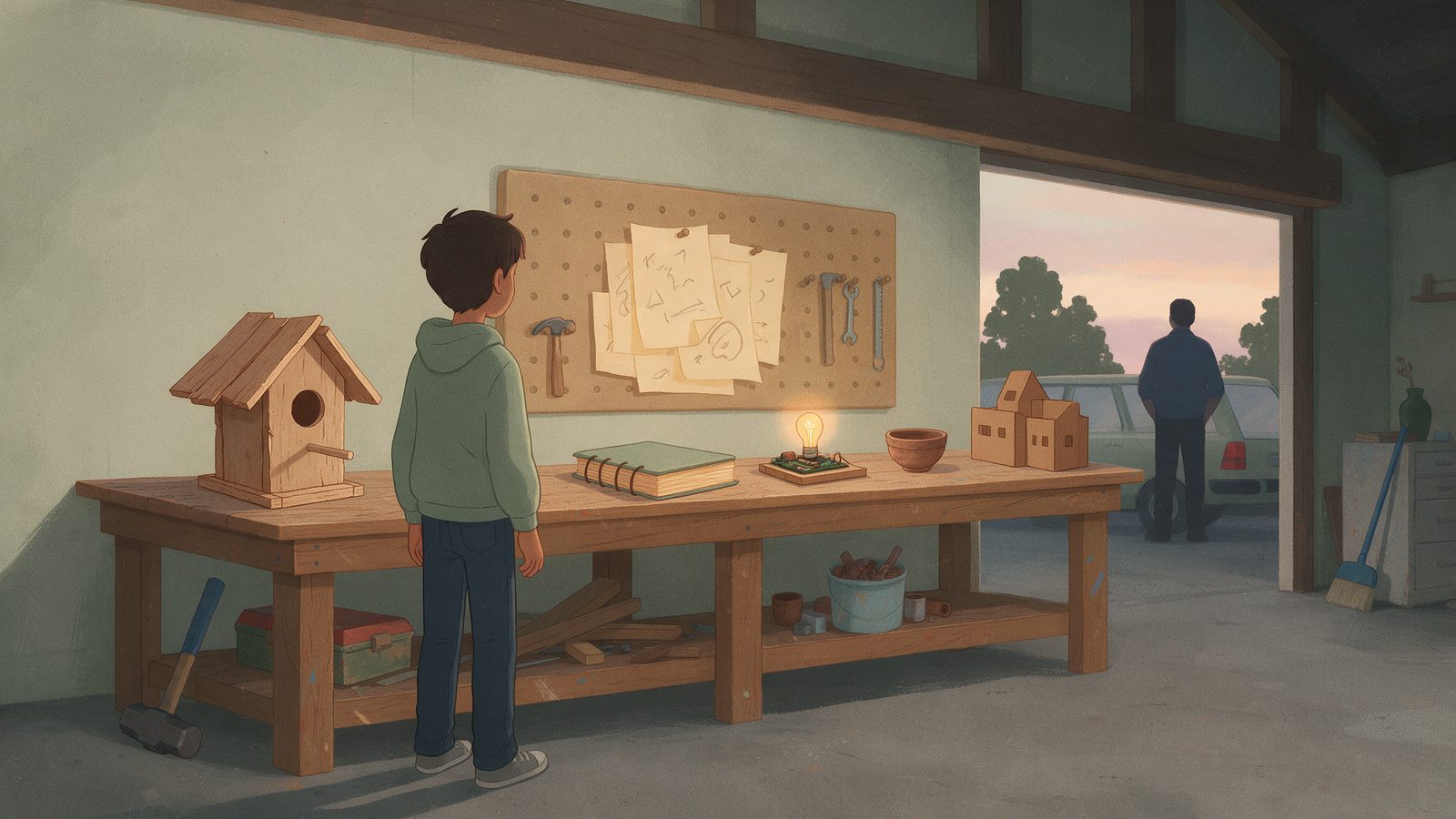
Keep a simple record of real work. You do not need a special app. A folder, a box, or a shared drive with a few things your kid made and was proud of is plenty. Include rough early versions next to later ones. Growth is more interesting than polish.
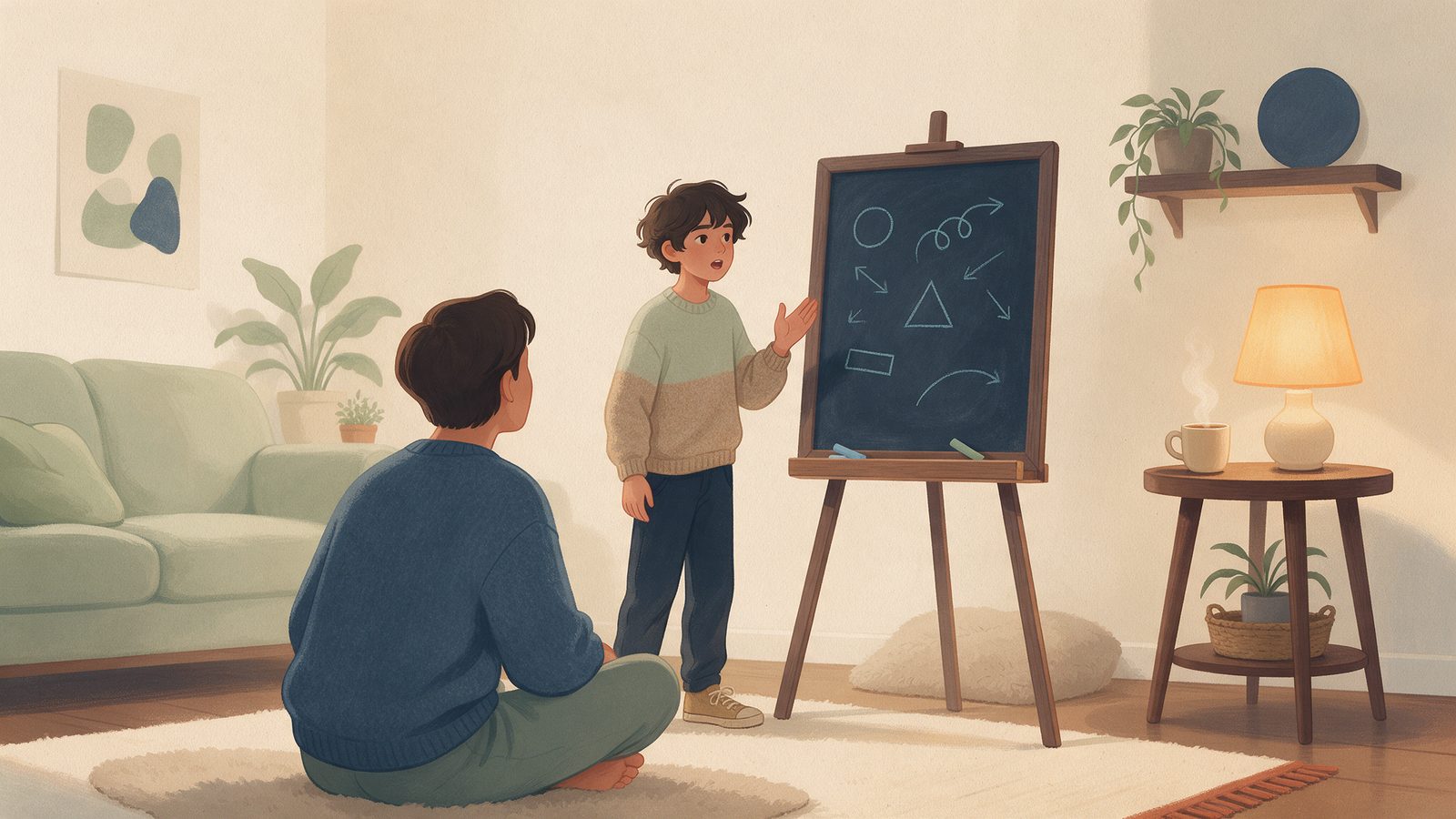
Practice explaining. At dinner, in the car, on a walk, ask your kid to explain something they made or figured out. Why did you do it that way? What was hardest? What would you change? This is the single most useful habit I know, and it costs nothing. My own middle schooler went from shrugging at these questions to giving real answers over a few months, mostly because we kept asking and actually listened.
Protect the right to try and fail. Let middle school be a sandbox. Not everything needs to be documented, ranked or shared. Some of the most valuable things your kid does will never appear on any record, and that is fine.
Be skeptical of urgency. If a product suggests your middle schooler is falling behind for college by not using it, that is a sales tactic, not a fact. Real readiness is built slowly, over years, mostly through ordinary work and curiosity.
Ask the privacy questions early. Who sees this? How long is it kept? Can we delete it? Can my kid see everything that is recorded about them?
Takeaways
- Admissions is varied and changing. Be wary of anyone who claims to know exactly what colleges want, especially years in advance.
- The broad shift is toward evidence of real work and skills, alongside traditional measures, not instead of them.
- Explaining your own work may matter more over time, especially as AI makes polished artifacts easier to produce.
- Build skills, not dashboards. If the skills are real, the evidence will follow.
- Keep a simple folder of real work, including rough drafts, and talk about it often.
- Protect middle school as a time to experiment, and ask hard privacy questions before any record of your child goes into a platform.